Yemen Mocha Pour-Over Guide: 12 Key Details from Roast to Flavor

Introduction: Yemen Mocha coffee, one of the oldest coffee varieties in the world, is memorable for its unique nutty chocolate flavors and Middle Eastern spice aromas. This article provides an in-depth analysis of the complete processing workflow for this Typica and Bourbon mixed-variety coffee from the Mattari region, from the characteristics of naturally processed beans grown at 1,400 meters to precise extraction parameters at 90°C water temperature, offering professional barista-level practical guidance including green bean storage points, pouring rhythm control, and flavor defect identification to help you perfectly present the layered charm of this scarce specialty bean from a war-torn region.

Yemen, as the first important transit point for coffee spreading outward from Ethiopia, had its Mocha Port (now called Hodeidah Port) once serving as a hub of the global coffee trade. The coffee produced here was named after the port and shares its name with the modern popular chocolate drink "mocha" but is fundamentally different. The current situation in Yemen is complex, with Houthi-controlled areas including major coffee-producing regions, making the fruit of these ancient coffee trees growing on slopes above 1,400 meters even more precious.

Yemen Mocha coffee, represented by the Mattari region, uses the natural sun-drying method passed down locally for hundreds of years. Typica and Bourbon mixed-variety coffee trees planted on steep terraces require the ripe fruit to be dried in intense sunlight for 20-30 days. This traditional craft gives the coffee beans a rich caramel base and unique fermented aroma, but at the same time requires roasters to precisely control the heat—dry beans with only 9-10% moisture content scorch more easily than ordinary green beans.

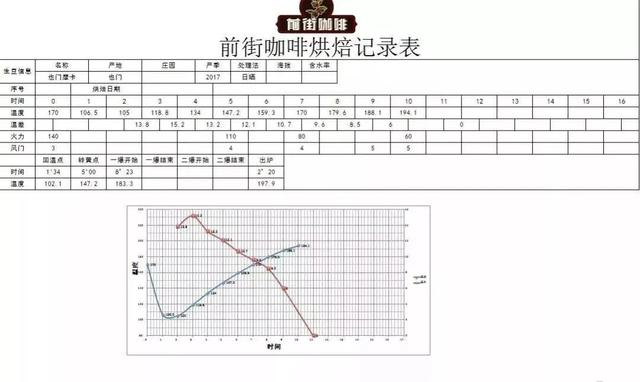
Professional roasting recommends a medium-sized drum roaster (approximately 550 g capacity), with the initial bean charge temperature controlled at 170±2°C. Due to the irregular bean shape and higher density, the early-stage temperature rise needs to be slow: reach the yellowing point of 147.2°C at 5 min 00 sec, at which point the bean surface should show an even straw-yellow color. Set first crack start time at 8 min 23 sec (183.3°C), then extend the development phase by 2 min 20 sec to 197.9°C for drop, which can fully reveal its potential flavor layers of nuts and dark fruits.
For the pour-over practical section, a V60 dripper is recommended, with the key parameter combination: 15 g dose, 1:15 coffee-to-water ratio, medium-fine grind (equivalent to BG#6S, approximately 70-75% passing a No. 20 sieve). Water temperature must be precisely maintained at 90±1°C—too high will accentuate sharp acidity, too low will suppress the development of chocolate flavors. A three-stage pouring method is recommended: the first stage pours 30 g hot water for a 45-second bloom (be careful to cover all the coffee bed), the second stage pours in an ∞ pattern to 125 g for the first stage break, then when the water level drops until the coffee bed is visible, continue pouring to a total water amount of 225 g, and finally complete the drip through at 2 min 00 sec ±10 sec.

Flavor expression shows dynamic characteristics as temperature changes: the high-temperature stage (above 85°C) highlights the mellow richness of dark chocolate and roasted almonds, accompanied by a faint peanut shell note; when cooled to 60-70°C, the grape-like acidity and cinnamon-like spice in the finish gradually emerge, leaving a cooling aftertaste in the throat similar to Middle Eastern mint tea. Common extraction mistakes include: pouring too fast causing channeling (manifesting as sharp acidity and a thin body), grinding too coarse causing a missing finish (check whether there is an obvious salty-astringent sensation).

For storage, special attention is needed: the natural processing characteristics of Yemen Mocha coffee make it more sensitive to humidity; it is recommended to store in one-way degassing valve foil bags, with ambient humidity strictly controlled between 45-55%RH. The optimal flavor period after opening is 14-21 days; prolonged exposure to air causes the spice-type flavors to fade rapidly. For enthusiasts seeking the ultimate experience, try sealing a small amount of coffee beans together with cinnamon sticks for 12 hours, which can enhance the layered expression of Middle Eastern spice flavors.


